-
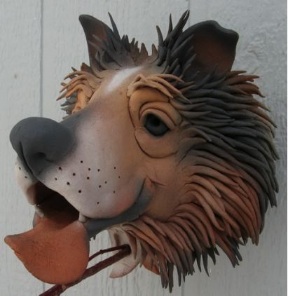
why are there so many unique birdhouses out there?
 While doing some bird house research and cruising the web yesterday, there were literally tons of unique birdhouses out there. Some of them began losing their uniqueness because they kept showing up, over and over again. Whimsical, finely detailed architectural styles, rustic, modern and just plain silly bird houses would all make the grade for a perfect nest site. Most had clean-outs, drainage and good ventilation. They also had safe distances from the entrance to floor-helping to keep nestlings safe from predators.
Truth is, the plain wooden houses also provide optimal nesting sites for feathered friends, provided the habitat is somewhat suitable. So why are there so many unique birdhouses out there? Well, for one, people like to decorate their spaces, giving a character and warmt
 h that applies to their outside environment too… call it curb appeal for the yard if you will. Outdoor space and gardening are wildly popular, and for many, backyard birding complements the garden, adding another dimension with moving color, sites and sounds.
Fostering nature is rewarding in many different ways. Whether growing tomatoes, watching birds at a feeder or monitoring bluebird boxes, something from within simply awakens the soul. And absolutely, in this chaotic and fragmented world… our souls could all use some awakening! Another reason they’re so popular? Many of the houses could be classified as bonafide art, expressions of the passion and sheer talent of the artist, who’s likely also into birds on some level.
Maybe that’s why so many unique birdhouses exist? With a severe decline in habitat, and shortage of natural nest cavities, it’s a really positive sign that more folks are helping to house the birds. And if your birdhouse happens to serve as an extension of your personality or character… so be it 🙂
-
a bird feeder bracket that’s not!
 It’s pretty cool when you can take an item and make it work for something other than its intended purpose. Surely there’s some scientific name for it? I do this kind of stuff all the time around the yard/wildlife habitat (which is my little slice of heaven when time allows).
This bird feeder bracket for instance, serves a leaf mister perfectly. Being a raised front porch, the bracket attaches to the porch rail and sits just right above native salvia and clematis. The beautiful thing is that the bracket can be moved if and when an area becomes too saturated from the mister.
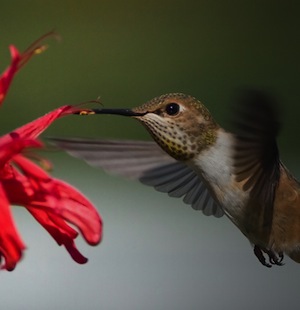
Action? The buzz and flutter of activity in summer is stupendous! Both butterflies and hummingbirds dance, play and flit back and forth constantly. Although the salvia draws them in, the star attraction is definitely the gentle mist of water. Looks a bit strong in this photo, but it’s really not at all.
Even song birds will sit on the bird feeder bracket and very tip, just waiting for the water to start! Imagine that – birds attracted to a perch where no feeder exists! Just a downright shame there were snow flurries in Atlanta this morning 🙁 Come on spring!
-
new experience with thistle feeders
 “We are just learning about the appetites of the finches.
We are already out of thistle !!! But what fun !! Jan”Recently some folks in Alexandria, LA developed an interest in backyard birding. Diving right in with a suet feeder, hopper style feeder for sunflower seed, a bird bath with mister (for summer) and two thistle feeders, the timing couldn’t have been better – for the birds and for them to witness the amazing flurry of activity this pre-spring season.
By her note above, we’re gathering they’ve got flocks of pine siskins and goldfinches in the yard right now, we sure do here in North GA.! For months thistle feeders sat, with seed going bad due to lack of activity. Then out of nowhere… tons of birds chowing down on thistle!
Also called Nyjer, thistle’s other nickname among many is “black gold” because it’s not a cheap seed to offer. A bit on the pricey side, it does have the benefit of being a non-germinating seed, one of very few seeds that won’t sprout weeds. But it’s about the only food adults will feed chicks in summer, so extra feeders (like thistle socks) and lots of seed greatly helps goldfinches thrive and flourish during their late breeding season (June and July).
Being new to the birding scene, Jan had the right idea in mind when she inquired about creating a welcoming and bird-friendly habitat in their yard. No single feeder, house, or birdbath will attract as many song birds as an overall habitat with natural food sources and shelter. And since we’re in the same planting zone, it was fairly easy to come up with a few suggestions too. Rather than re-word, and re-type the email, here’s our thoughts on cre
 ating an attractive and wildlife-friendly environment.
“OK, did some research and thinking of my own yard… here are some suggestions:
Overall: Mature trees and Shrubs are very good for attracting all winged friends as not only a food source, but shelter. Since this is an open area, I’m thinking your yard must have mature trees along the back/sides? Many birds nest in trees and shrubs as they’re not all considered “cavity-dwellers” (birdhouse users).
If you’d like some kind of height or focal point around the new area, Butterfly Bush, Viburnum, Mimosa, or a Crab Apple is a great choice. These are hearty, and provide both shelter and food (nectar or fruit). Any of the native berry-producing shrubs will also provide a great food source.
Using pots for annuals is always a great option too, for color, nectar and seeds in fall!
Petunias, Zinnias, and various salvias; most garden center plants now have tags depicting if the plants provide a food source, so just look around. There should be lots of options here! You can even save seeds in the fall for replanting in spring.Cardinals, chick
 adees, finches and titmice will eat seeds of many plants. The trick is not to dead-head them in fall when the urge strikes! There are lots of perennials that fit the bill in this category: coneflower, coreopsis, seedum, black-eyed susan, goldenrod, sunflowers, mexican sunflower, native salvia-(very good), coral bells,. Again look around at the garden center, and if you’re lucky… you’ll find an employee with some knowledge on the subject!
As far as for ground cover: I think mulching the area and adding plants is a better option than a solid ground cover. You’ll want to be able to get to the feeders, bath, mister and “parts” of the landscape without stepping all over things. Also, spilled seed may sprout weeds, and it’s easier to control that if not covered solid with growth.
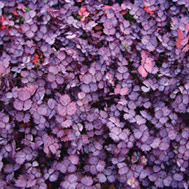
 Day lilies are a good choice, the Stella de Oro’s are quite hearty and pretty! If you wanted something more low-growing that spreads, (full sun) try purple sheep’s burr, also called purple goose leaf. In fact this would be a beautiful contrast with yellow lilies! The Stella variety tends to stay more compact as opposed to some which grow taller and appear “lanky”. Never, ever plant creeping strawberry, or ivy…these are the bane of my existence in parts of my yard 🙁 They are also a wonderful habitat for snakes, especially if you’ll have the mister going when it’s warm!
Native salvia: I’ve got a bed of this which provides color from spring through fall. Vibrant red, there are always
 hummingbirds and butterflies hovering. It’s actually below one of the misters, and does well with the “extra water”. Extremely hearty, it multiplies each year, spreading roots, but does tend to grow taller, more of a back-drop. Lantana would also be a good choice if you’ve got the space for it to grow. I love perennials!
It may be helpful to actually sketch out the area on paper before planting. Drop in the plant names to get an idea. You can always do search for pics to get an idea too!
Okay… hope this helps, and as always, feel free to ping me back with questions”

Birding Tips, Information & News