-
It’s time to prep bluebird houses for nesting!
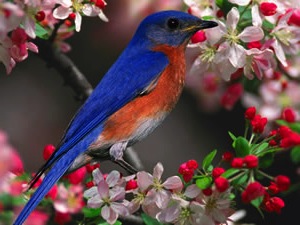
 Although some days it doesn’t feel like it, spring is just about here. Buds forming on trees are beginning to unfold, while spring bulbs continue sprouting their deep green foliage. In the Southeast, many bluebirds never left for the winter. With accommodations like ours… why would they? Several heated baths and live mealworms fed daily are a pretty good gig for them.
Nest one spotted in the Gilbertson yesterday, and lots of wing-tipping and clamoring over other bluebird houses on the property. This is a good sign that actual egg-laying isn’t too far off. The wing-tipping is a hoot to watch, it’s the male who does this to attract a mate. Each time he waves a wing as if to say “hey… look at me over here, and look at this great nest box!”
 Prior to winter, pine shavings were added to all birdhouses around the property. Providing warmth and a decent roost for cold nights and wet freezing days too – the shavings were removed two weeks ago. Each house was inspected for breakage, cracks and squirrel damage. Two metal portals were added to entrances where squirrels had enlarged the hole to gain access. Little boogers even got their own house last fall! Many times you can salvage bluebird houses or any birdhouse where squirrels have chewed the entrance. As long as the damage isn’t too far gone, a metal predator guard, or portal may be attached over the hole.
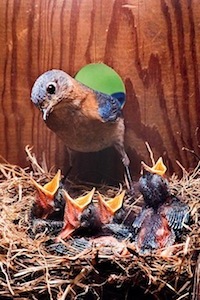
Typically bluebirds may have two to three broods per season. If conditions are perfect (habitat and weather) you may even see four broods from the same parents! But it’s always the second brood that’s most enjoyable to watch. Juveniles instinctively help raise fledgelings, teaching them where the food is and even helping to feed them. Talk about family ties!
 Most bluebird houses are North American Bluebird Society Approved (NABS) will be wood, recycled plastic or vinyl. Other materials are used, but these houses usually are not “approved”. That’s not to say they can’t host a successful brood… just maybe not the best choice? Of most importance, is the distance from the entrance to the floor. If not at least five to six inches, predators may find easy targets. Since many Eastern bluebirds use pine straw to build nests, this raises the chicks even closer to the entrance, so distance is best here. Open space is another prerequisite for hosting bluebirds. Due to their nature of hunting insects, low grasses and natural perches are favored. And of course, the fresh water. A birdbath of any kind will entice bluebirds and others to your place in no time!
Should you decide to try offering live meal worms this year, there’s a simple supplement to greatly help females with the egg-laying process. Calcium carbonate will help prevent egg binding. A situation that’s usually fatal, it can happen if too many worms are consumed, as they are calcium-depleting. For some reason, the egg does not pass through the duct properly, it gets stuck, resulting in probable death. You can still offer worms, just not too many at a time, or maybe consider adding the powdered calcium carbonate supplement as a preventative measure.
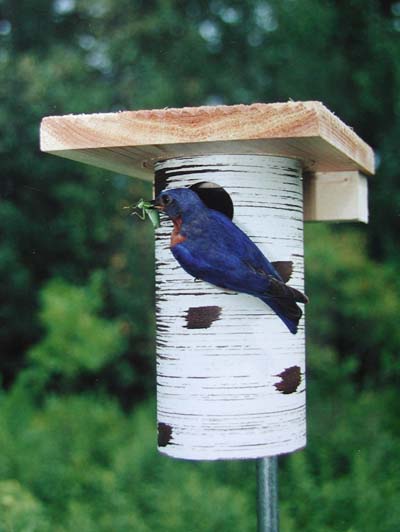
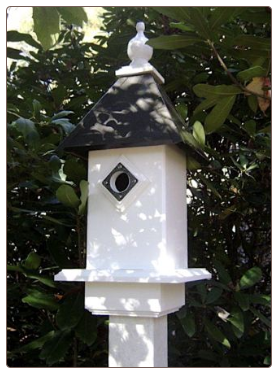
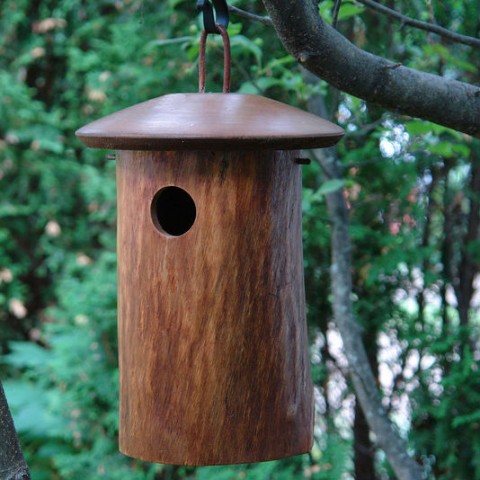
A few bluebird houses we’ve had success with (from L to R) The Gilbertson, NABS Approved Vinyl House, and the very cool Mango Wood Natural Bluebird House. We can assure, a bluebird would be happy to call any one of these “home sweet home” 🙂


-
Frosted Landscape with copper bird feeder create a magical scene
 Didn’t the ground hog see his his shadow? Did he not? I always get this confused, but was sure they said it would be an early spring! Snow showers in North Georgia early this morning… what the heck?
Bluebirds are already nesting here, and other songbirds are dueling for territory and mates. Once the pairs are established, thus begins the nesting and chick-rearing process.
This landscape sure does make for a picturesque scene though. An elegant copper bird feeder set against frosted greenery, with movement and song from birds almost helps one through the dreariness of winters’ final stretch. And speaking of bird feeders and winters’ end… we can’t wait because birds have been eating us out of house and home! Never thought of wishing for bugs – but they sure would help the food supply! Sunflower, thistle, suet, peanuts and more… omg, spending a small fortune on bird food the last two months!
The early riser at this copper bird feeder hung around for a good twenty minutes before he was joined by friends. A regular at the feeder for months now, he always seems to be the first one for breakfast. Wonder if birds have a pecking order? (no pun intended)
If time afforded the opportunity to actually sit and “bird-watch” life would be so much more relaxing! Lately, the food goes out at night, so it’s there for birds first thing in the morning…. because this is usually when I get to bed. The goal is to sleep before the birds start singing!
By the way, this feeder’s actually about four years old, but it still looks the same as it did upon arrival. Now we think that’s a beautiful thing!
-
Hearts for Valentine’s and wild bird feeders
 Hearts aren’t just for Valentine’s day!

Feeding sunflower hearts or a no-waste mix greatly reduces ground mess below your bird feeders. Some home owners have backed off from feeding birds, as the ground waste may have attracted other, less desirable critters (especially if the house sat in close proximity to a wooded area). But there are lots of ways to still feed birds… without the mess!
The no-waste mixes and sunflower hearts & chips are a perfect choice for most types of wild bird feeders as a great variety of species enjoy these premium seeds. They may cost a little more, but it’s money well spent if you’d still like to see those beaked buddies in your yard, sans the ground mess. Anything that does fall to the ground will not be left for long, as ground feeding birds who eat seeds (like cardinals, doves, juncos, chipping sparrows, towhees) will snatch this premium meal up before it has time to sit.
Using a seed tray or seed catcher will also help to eliminate ground mess. The adjustable trays actually serve as an additional feeder with their large platform area. Today’s seed catchers need not attach directly to the bottom of the bird feeder either. Hanging trays offer several installation options, and larger platforms are made to fit on feeder poles or 4×4 posts below the feeder. Birds who’ve never used the feeder itself will utilize the platform for a meal of fallen seed.
Suet is another great way to feed birds sans any ground waste. It’s neat & clean,
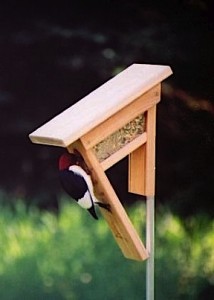
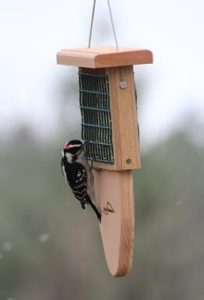
 economical and easy to feed. Clinging birds like chickadees, nuthatches and titmice like it, and you can’t beat it for cold weather feeding! Packed with fat and protein, suet provides those extra calories for energy needed to stay warm. Standard suet cages are great, but a suet cage with tail prop will entice woodpeckers too. The extended panel below the cage gives them leverage to “prop” their tail and perch more comfortably. Guess it’s the difference between a metal folding chair and a Lazy-Boy!
Wild bird feeders come in a gazillion style colors! First step is to figure out what birds you’d like to attract. Specialty feeders exist for everyone… from hummingbirds and bluebirds, to Goldfinches and Orioles. Of course fresh water is always an excellent method to entice birds, and some form of birdbath (even a saucer) should always be considered in any bird-friendly habitat.

Birding Tips, Information & News