-
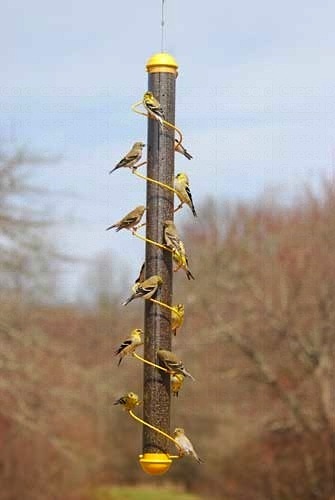
cool spirals on these big thistle feeders
 It’s a busy time for American Goldfinches as they have one of the latest breeding/nesting cycles of most backyard birds. They’re also one of very few breeds who actually molt twice a year and grow new feathers. Their electric yellow plumage is hard to miss, and most thistle feeders are seeing a good bit of traffic right now (provided the seed hasn’t gone moldy from all the rain). If yours is sitting with no takers – best to dump old seed, clean the feeder and replace with fresh thistle seed.
Innovative by design with quality construction (no cheezy plastic parts here) these 36-inch tall, large capacity thistle feeders have a cool spiral instead of perches. Featuring more feeder ports, birds really do “run the spiral” hopping from one one port to the next. This opens up space for more birds to join the party, no more waiting around for an open perch to catch some chow!
Goldfinches feed babies thistle (or nyjer) exclusively. Gross as it sounds, parents chew and prepare the tiny black seed, regurgitating it into babies’ mouths. It’s not until juveniles are out in the world that they may start to discover and eat insects. There’s a kind and quiet demeanor about this favored songbird, you’ll rarely catch them squabble at feeders. Rather than fight for a spot, most will give up and maybe try again later. Hanging a few economical thistle socks helps to alleviate this problem during peak season.
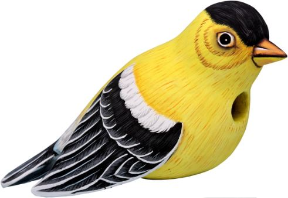
In fall when they molt again, their vibrant yellow plumage will give way to new olive drab feathers for fall and winter. It may seem like your Goldfinches have gone on their way and migrated south, but they’re still around! Keep thistle feeders out year-round to accommodate these resident birds, (and fresh water in a bath) and next summer that lemon yellow color will once again grace your yard. So popular these birds are, there’s even a birdhouse modeled after one… although typically they do nest in hedges or trees.

-
Cool Pint-Sized Bird Baths
 There’s really only one rule when it comes to enticing birds with water… keeping it fresh!
Bird Baths of all sizes and shapes are known to attract and keep birds coming back, in fact it’s the easiest way to attract them. Although depth is also important (optimal is 2-3 inches) a large rock may always be placed in the bath for safe perching should the bowl be deeper. And there’s absolutely no rule that says you must fill it to the top! Especially in summer, when lots of fledgelings are around, shallow bird baths are safest for all.
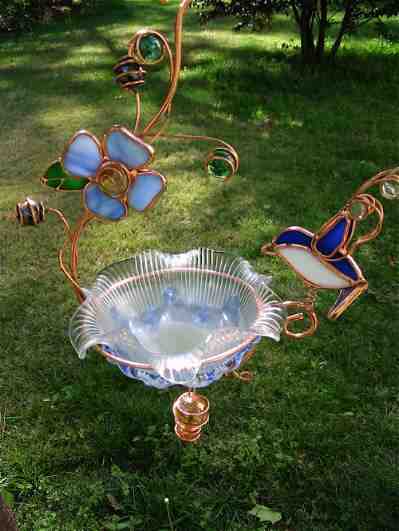
This mini-bath is a fun way to offer fresh water because it has lots of perching spots. Vibrant stained glass (in six designs) catches light beautifully, and best of all, it can be used as feeder in winter months. Is it too small for a bath? Nope… we’ve seen titmice and chickadees drinking from ant moats!
When used as a dish feeder, these mini-baths will accommodate a great variety of treats too. Seed mixes, suet & nuggets, shelled or whole peanuts, fruit, even mealworms if you’re so inclined!
Shown in the bluebird style, there’s a hummingbird, butterfly, lady bug, dragonfly and bumble bee too. Each in vibrant stained glass and copper, these pint-sized bird baths are excellent for small spaces like on the deck, patio… or even the apartment balcony!
You May Also Like

Keep Mosquitoes Away: Attract More Birds with moving Water Features
-
do fruit in wild bird feeders for summer season!
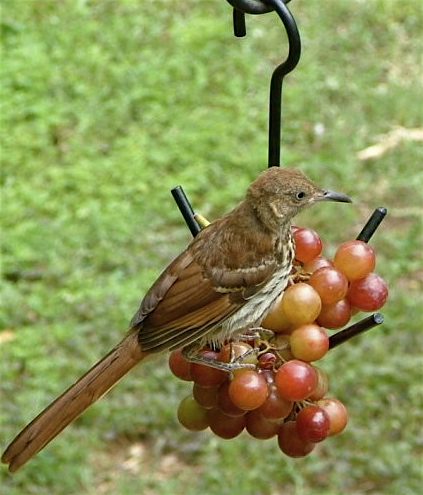
 The best of summer… when everything seems bolder and more alive. Gardens pop with vivid color, and many birds’ plumage is at its brightest before molting. Colorful fruits are also a great idea for wild bird feeders! Migratory birds (as well as a few residents) enjoy various fruits as part of their healthy diet too 🙂
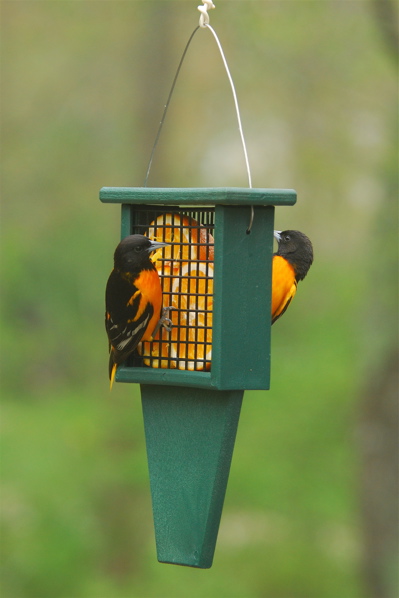
Adding a new dimension to feeding wild birds, fresh fruit offers great variety for many species, there’s just so much more than plain old birdseed. Staked, platform and open dish feeders accommodate many types of foods – allowing you to change things up with seasons. Got a suet feeder? Simply try orange slices for orioles, woodpeckers, cat birds and others.


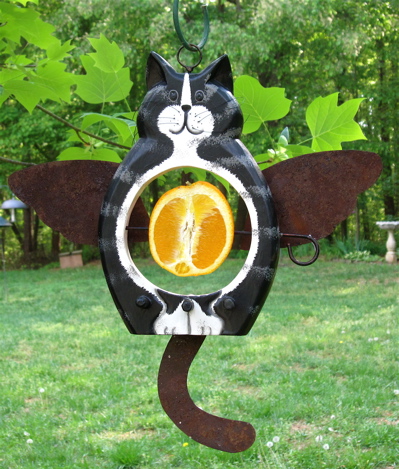
Some staked and dish feeders are far from boring, fun designs to add a splash of color, or even bring a smile to say any cat enthusiast! With these wild bird feeders, suet is perfect for winter feeding too, and there’s lots of recipes online (and on our site) to make your own. Large formed balls work best on the pin, and by mixing a big batch, it’ can be stored in the freezer for ease of use.
Because variety is the spice of life, mix it up for your feathered friend this summer! You never know who may stop by, and after all, you can always revert to boring birdseed in your feeders!

Birding Tips, Information & News