-
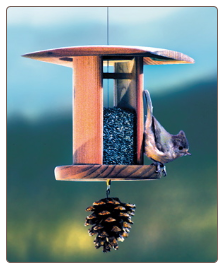
Want more birds at your nyjer feeder?
 There are no set rules in wild bird feeding, we offer birds different varieties of food that entice them and keep them coming back. Of course habitat plays a huge role, with places for shelter and nesting like mature trees, thickets and shrubs. The all important water source is also a big factor for attracting feathered friends.
Just because finches eat thistle, or nyjer seed, doesn’t mean they wont’ frequent other feeders offering different seed mixes. For the last few days, I’ve been seeing Black Capped Chickadees at the nyjer feeder. Now maybe it’s just the time of year, but I’ve never seen them at this feeder before. Also, the juvenile Eastern Bluebirds, who will eat suet during our cold winter months, have already started feeding at the suet feeder too.
A favorite treat for several birds is to mix thistle seed with finely chopped sunflower hearts. Placing this seed mix in the nyjer feeder attracts Juncos, Pine Siskins, Towhees and House and Purple Finches, as well as the Goldfinch.
In early spring, try offering nesting materials and encourage birds to take up residence by nesting in your yard. Collect dryer lint, pet hair, cotton yarns and fibers, and decorative mosses to create a nest ball with variety of materials that birds prefer. You can place them in a standard suet cage, or mesh produce bag from the grocery store. Of course commercial materials are available, and even some cool holders to accommodate them.
Just because the bright yellow feathers disappear in fall, it doesn’t mean these birds are gone. Remember to keep nyjer feeders out year round with fresh seed, as goldfinches and others will stick around during during winter months.
-
Make a Hanging Bird Bath
 Fresh water is hands-down the best way to entice wild birds to your yard. Birdbaths really do attract feathered friends and keep them coming back… even more so than houses or feeders! Baths can range from pedestal styles to ground or deck mounted models, and of course hanging bird baths. Found in materials like ceramics, stoneware, copper and glass, birdbaths range from simple to elaborate works of art for ultimate garden decor.
You needn’t spend a small fortune to have a bird bath though, any shallow container that holds water works just fine for birds. A pretty plant saucer will make a great bathing spot. If ground predators lurk in the area, it’s best to raise the bath off the ground. The most important thing is the water be fresh. What’s the best kind of birdbath? The one you are willing to maintain.
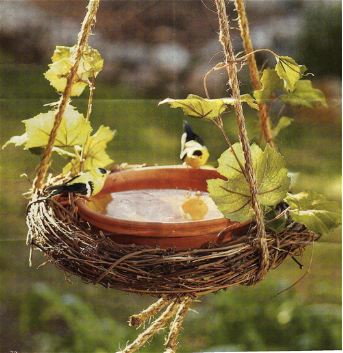
This clever hanging bird bath can be made very quickly and inexpensively. Necessary materials are rope, a plastic plant saucer and a grapevine wreath, the decorative leaves are strictly optional.
First cut three pieces of rope- 5 feet in leng
 th. Knot them together at both ends, and place the grapevine wreath inside the ropes as shown here. Next place the saucer inside the wreath. If you opt for the decorative leaves, simply tuck them into the wreath and wind them around the ropes. Use more rope for hanging if necessary.
Fill with water and enjoy birds at their new refreshing oasis!
-
Finch Feeders and Bald Eagles?
Yes, this post was planned for Finch Feeders, but a I received a very cool email this morning from a friend. Now I’m not sure if this has circulated or saturated the media, but definitely worth posting!

Several months ago (January [in Oregon ]), the weather stayed so cold that the bald eagles were cruising over our houses looking for helpless cats to make a quick meal.
They could not access fish that were at the bottom of the river and had gathered together.
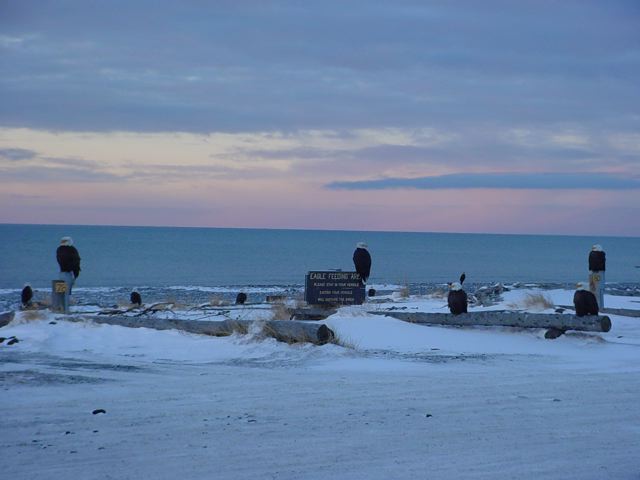
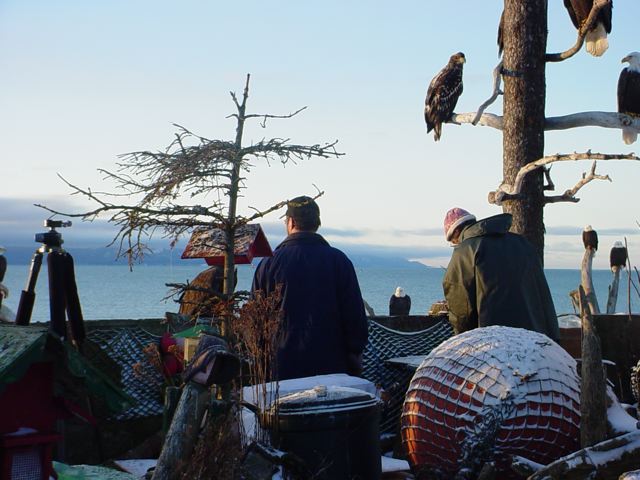
Some kind souls decided to feed the eagles down at Goose pit so they would survive the cold spell. They gathered fish and started feeding the group of eagles huddled on the shore.
The photos below show what happened.
A former teaching colleague took these photos in front of his home. Incredible!Feeding the Eagles!
A beautiful morning feeding the eagles, Jan. 2010

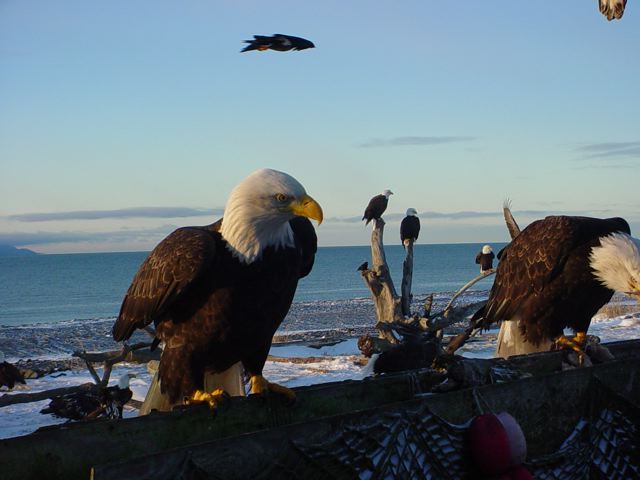
Once we started throwing out fish, they did not seem to fear us and word spread fast.

Eagles fighting for the fish. Jan. 2010

No zoom lens here, I was this close!
 <
Here are the men who were feeding them. It was so amazing to get this close!
It was not too long ago that the American Bald Eagle was an endangered species.

Birding Tips, Information & News