-
How Would Heated Bird Baths Help Birds Stay Warm?
 The polar vortex, record low temperatures in the deep South, gripping snow storms that paralyzed many cities… thankfully we’re finally starting to thaw out! This is when creature comforts of home can be most appreciated, especially if you had to spend any length of time outdoors in this frigid weather.
Birds and wildlife in general have additional stresses during severe cold as they must expend more energy to find food and shelter. Sure they’ve adapted, and use various methods for coping with high winds and biting cold. The weaker of any species may succumb to starvation or predation, thus the old adage “survival of the fittest”.
Wild birds will seek shelter in shrubs, dense foliage, natural cavities, even birdhouses and roosts. Some, like bluebirds, will even huddle together for warmth. Many common backyard birds will spend the entire day at bird feeders packing on calories to make it through another night. Peanuts, suet and black oil sunflower provide power-packed meals for most of our feathered friends! Keeping feeders clean and full greatly increases survival rates of resident songbirds during freak weather like last week.

But what about water – surely with all that snow out there, birds can get water? Yes, they can, but it costs them dearly. The snow must be converted to water, which takes precious energy, and during single-digit temps, every ounce of energy must be conserved in order to survive.
This is when heated bird baths can literally be life savers for some birds since they require water daily. Some baths may even form ice around the edges, but they’ll still leave open water towards the center. Adding a heater to your existing bath is also a great option, or even putting out a shallow pan of warm water several times a day. Hey, if the snow’s that bad you’re probably home from work anyway, right?
Please help birds through tough winter weather by offering food, water and shelter, their lives depend on it!
You May Also Like

Keep Mosquitoes Away: Attract More Birds with moving Water Features
-
Bitter Morning’s Breakfast Menu with Extra Goods for the Mealworm Feeder!
 The birdie menu was heavy with special treats today as frigid temperatures almost did my own hands in while feeding! Fingers actually stinging, they had to be warmed by the vent to feel them again. You may say ha… it’s Atlanta and not that bad… wanna bet?
A balmy 5 degrees right now, there’s no chance of leaving the mealworm feeder filled for dawn… the poor little mealies will freeze. That’s what happened last night 🙁
Actually, this is a pretty normal AM feeding, because if there’s too much food out, the nasty starlings hog it all, so daily rations are fed twice instead. Plus everything’s freezing right now.
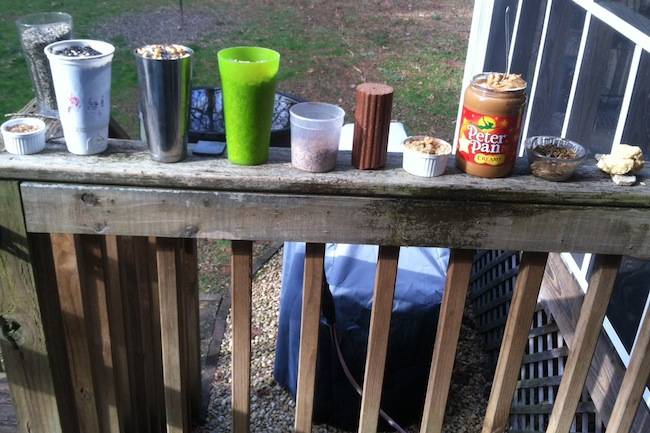
Not an ad for Peter Pan either, this is absolutely the normal routine, (for the birdhouse chick anyway) just happen to snap a photo of it today.
So, what exactly does this backyard bird fanatic feed? From right to left, here goes:
- Finch mix, consisting of finely chopped sunflower and thistle. Lots of goldfinches, just not gold right now.
- Small cup of live worms for the new enclosed mealworn feeder… take that starlings! Carolina wrens are usually first to figure out these feeders.
- Large cup of cardinal mix for the platform feeder.
- Large cup of critter mix for the squirrels and a few other birds.
- Large cup of sunflower hearts/shelled peanut mix for platform feeder #2.
- Live worms for two hanging dish-style mealworm feeders. Meant for the bluebird pair and eastern phoebe, but many others partake.
- Sweet corn squirrel log, which is equal to about 12ears of regular corn cobs. These must be tightened up every few days as our crafty critters have managed to steal them from time to time!
- Small cup of bluebird banquet, suet-like mixture that’s easy to make. Check our site (under birding resources) for this recipe and more.
- Peanut butter, slapped right on tree bark is great for squirrels and birds. High in fat and protein, these extra calories provide energy needed to stay warm.
- Re-hydrated meal worms for yet another dish-style feeder. Boiling water added to dry worms , steep and drain.
- Bark Butter and suet slice for the woodpecker feeder.
- Note the heated bath behind the food, and the cord running across the yard for heated bath #2 of five. Too many feeders to s
 how pics, let’s just say there’s a good mix!
Seriously… who would make up this stuff? We spend a lot of time fussing over our birds – but it’s so worth having them around. It was so cold today that the squirrels didn’t even venture out until late afternoon.
Say you have only one bird feeder, that’s perfect too, just remember the water! Birds need a fresh water source even in the coldest weather. As far as Mr. Arctic Mass, you are not welcome in the South, so please go home now!
-
New Years Note for One of Our Bird Baths Ends 2013 Nicely

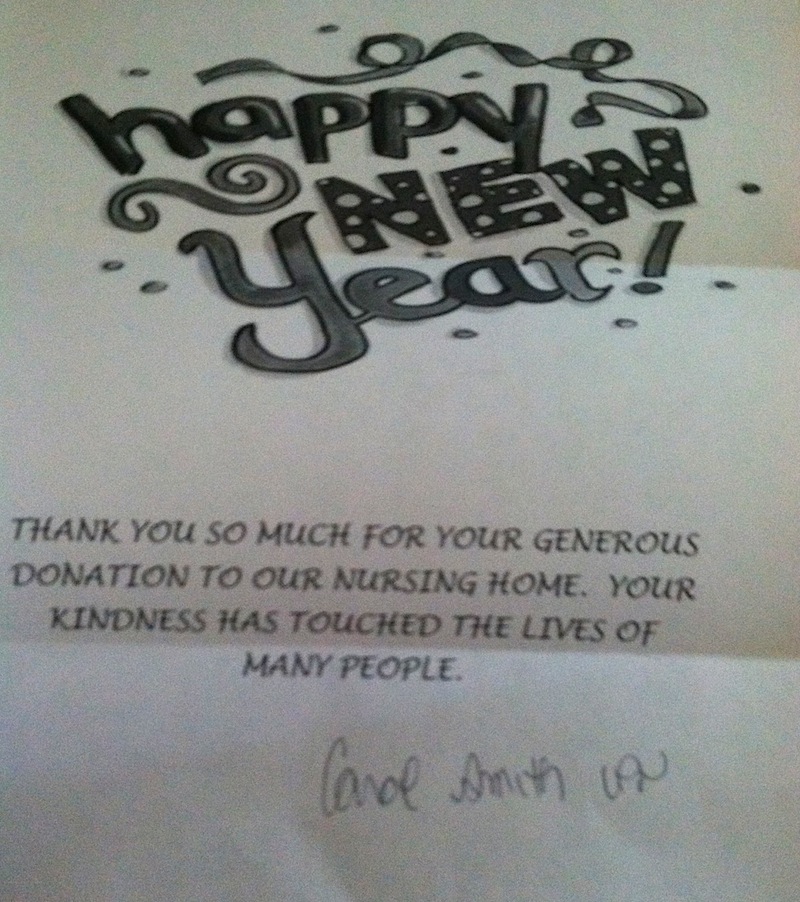
On the last day of 2013 it was nice to receive this note via snail mail. It was a thank you which stemmed from a resident’s simple request for a birdbath to attract some birds at the nursing home. We sent along one of the hanging bird baths, a couple of suet cakes with cages, and some easy suet recipes in hopes the kitchen staff might humor the residents – and help feed the birds on a tiny budget!
A post was published hoping some other birding businesses might catch wind of the simple request. A couple of benches would’ve been really nice for the folks to sit outside and enjoy the birds, but that was beyond our realm. It was just good to give, expecting nothing in return, and we managed a good bit of that for 2013, and will continue to do so in the new year!
Yes, 2013 had its ups and downs, from Fiscal Cliffs and natural disasters, to super storms, a never-ending winter, and government shut-downs. The Monarch migration was a bust, and bats and bees continue to perish at alarming rates. That last part may not sound very important… but just ask a farmer who grows crops. Without these pollinators the future could be grim.
So, Welcome 2014!
May winter be swift, for early nest starts and spring bulbs forcing through, for a safe and timely return of hummingbirds and all migratory birds, for a new awareness and stewardship of the nature around us, and for many happy & healthy fledges for all our feathered friends!Oh yeah.. and here’s that nice note 🙂

You May Also Like
Keep Mosquitoes Away: Attract More Birds with moving Water Features

Birding Tips, Information & News