-
Are Butterfly Houses for Aesthetics or Shelter?
 Surprising to me, we had a wonderful butterfly season in the Atlanta area this year. I can’t recall a summer where so many had populated my yard. I know the two leaf misters were a huge attraction for them, along with some newly planted milkweed. Other flowers like lantana and abelia shrubs saw lots of action from these winged jewels too. There is no butterfly house in the yard, and I’ve always wondered whether or not butterflies really use them?
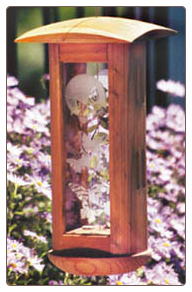
Some butterfly houses are like detailed works of art for the garden, they enhance and add a nice focal point to the area. The butterfly house shown here is constructed of durable red cedar, and the etched glass panels that catch light beautifully. It’s available as a hanging, or post mount model too.
But back to the question if butterflies really use butterfly houses or not?
A bit of research reveals the answer here: -
ADI Clarifies: 20 Bolivian Circus Tigers and Rehoming
Following the publication of a recent press report entitled ‘Bolivia: Twenty circus lions looking for a home’, Animal Defenders International wishes to clarify the situation.
Jan Creamer, ADI President said that there was speculation with regard to the fate of twenty circus lions looking for a home following the successful Bolivian circus ban, but that ADI’s position remained crystal clear.
“We were deeply concerned to read a media report that suggested that proposals have been made to euthanize older animals that can’t be relocated, without consultation with animal rescue groups such as ADI,” Jan said.
“ADI is totally opposed to any plans to kill circus animals before we have had a chance to look for homes for them.
“On numerous occasions, ADI has promised the Bolivian government, in particular the DGB, help with the relocation of animals from Bolivian circuses. We have offered to rehome the 20 lions that DGB has announced are to be relocated, but still await a response from them,” Jan said.
Animal Defenders International has asked the Bolivian Government to work with them and provide a list of all the animals in Bolivian circuses that need to be rescued, so that the situation can be fully assessed and a comprehensive rescue plan implemented.
Once species, ages and numbers are known ADI can look for suitable homes.. In the interim they have recommended to DGB that the circuses be required to continue to feed and keep the animals until they have all been assessed.
The request comes after the successful rehoming of an 18 year old Hamadryras baboon to a sanctuary in Berkshire, UK in early September, and four lions to California, USA in May by ADI, who were instrumental in securing a ban on animals in circuses in Bolivia.
These animals released by Circo Abuhabda were taken to Cochabamba as there was nowhere else for them to be kept. ADI were then given permission by the Mayor to build a temporary facility while the animals awaited export permits from the government, on the condition that when the animals were moved, the facility be dismantled and the area returned to parkland.
“Just like our previous successful rescues, ADI stands ready, willing and able to help and are waiting to meet with government officials to set the wheels in motion,” Jan said.
“This is not a lack of resources issue for relocating animals from Bolivian circuses for ADI and we will ensure that we do all we can to facilitate further successful rescues.
ADI would be pleased to hear from organizations willing to provide homes or help to relocate and retire every circus animal in Bolivia.
Contact: Agnes Huff, Agnes Huff Communications Group
Tel: (310) 641-2525, Cell: (310) 902-8131
E-mail: [email protected]
Web site: www.ahuffgroup.comAD -
Recycled or Wooden Bat Houses?
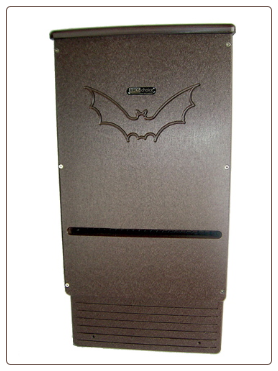
 The (not so new anymore) wave of recycled plastics is still a wonderful thing as for as birding accessories. Durable, tough, handsome, and most come with guarantees against splitting, cracking or fading. Bat houses are now available in recycled plastics, and like all other products, guarantee a longer life…in fact…a lifetime of use.
One of the advantages to this recycled bat house is the rich, dark color. Not only for aesthetic purposes, it retains heat from the sun to keep the chambers warmer on cold nights. It’s large enough to hold hundreds of the beneficial little brown bats, whole colonies if you will. Excellent for natural pest control, bats will consume whole populations of mosquitoes in one night.
Wooden bat houses are still mainstream, and are available for smaller groupings and large colonies too. Bat House Kits are even available if you’re so inclined to build your own. Most wood bat houses are constructed of red cedar, also durable and very long lasting. If purchasing a bat house, your decision may be based on looks, size, and or price. A wide variety of bat houses are available, the key is proper placement. Approximately 15-20 feet from the ground is best, usually facing a southern or southeast exposure. They may be post or pole mounted with additional hardware, or simply attached to a tree. Some say they can be erected on structures as well, we would not recommend this.
Help brown bats to thrive flourish in your yard by offering proper shelter and you’ll be rewarded with natural insect control for the season!

Birding Tips, Information & News