-
The Difference Between Ant Moats and Ant Baffles

 To protect your hummingbird-or any nectar feeder from ant hassles, the use of ant moats is strongly recommended. For the newer staked versions of hummingbird feeders, the ant baffle was invented. Essentially, it’s an upside down ant moat.
Instead of holding water to prevent ants’ crossing, the baffle requires a coat of petroleum jelly on the underside. This works the same way as far as preventing the ants from getting to nectar.
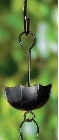
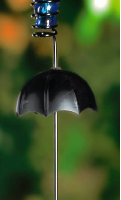
If you’ve ever encountered problems with ants at nectar feeders…well, once is enough! Ant moats like these by Parasol, are a one-time, relatively inexpensive solution to this nasty problem.
For those who enjoy watching the “flying jewels” feed close up, check out this great video produced by Parasol.
-
The Invaluable Ant Moat
 Ants just love sugary, sticky, sweet nectar! Whether it’s Hummingbird, Oriole or butterfly nectar, if they can get to it…you bet they will find it! But the good thing, and saving grace for those who feed nectar, is that ants can’t swim. They are virtually unable to cross a small body of water. Enter the invaluable ant moat.
These little gadgets make the difference between great birding experiences vs. pesky, miserable ones filled with unwelcome guests. Simple by adding an ant moat to your hummingbird feeder, or other nectar feeders, you will stop ants dead in their tracks.
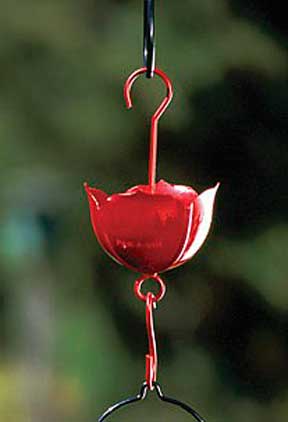
The ant moat shown here is a little nicer than the standard model, but they all do the same thing…stop ants from getting at nectar. In the heat of summer, a drop of salad oil may be added to the water to slow the evaporation process. Remember, the ant moats will not work unless they are kept filled with water.
-
Simple Nesting Material for Your Birds
 Entice and encourage birds to nest in your yard with simple materials found around your home. Although there are all kinds of cool nesting material kits out there, you can do this one yourself… easily!
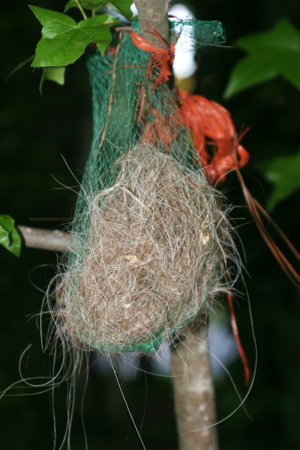
Start with a suet cage or even a mesh produce bag, like the kind apples come in at the grocery store. Next time you empty the lint basket in your clothes dryer, nix that soft, fluffy material as it’s just not natural.
Got a cat or dog? Pet hair is keeper. If you brush your pet, save the hair that accumulates in their brush. But steer clear if Fido or Fluffy has been treated with flea & tick meds. If you happen to have a horse… even better! The nesting material shown here is horse hair. Mostly from the mane and tail, it makes for great stuff to help bind the birds’ gatherings into a nest.
Ever work with silk or dried flowers? The decorative moss, especially Spanish or sphagnum moss is wonderful. Stuff a little moss into the nesting ball too, but keep strands short. They even like bits of raffia and especially feathers. Hang your nest ball from a branch in a visible spot for birds to easily see it. Somewhere in the proximity of existing bird feeders or birdhouses is best. Don’t pack the materials too tightly as a generous air flow dries them quicker after rain.
Simple materials from around your home, that are usually discarded, make for great nesting materials to help birds thrive and flourish in your backyard. You can entice birds to stick around, without adding more feeders and houses, but by offering valuable nesting material for them to help raise their families. Don’t forget the shallow fresh water too!

Birding Tips, Information & News