-
FOX SPIT HELPED FOREST SERVICE CONFIRM RARE FIND

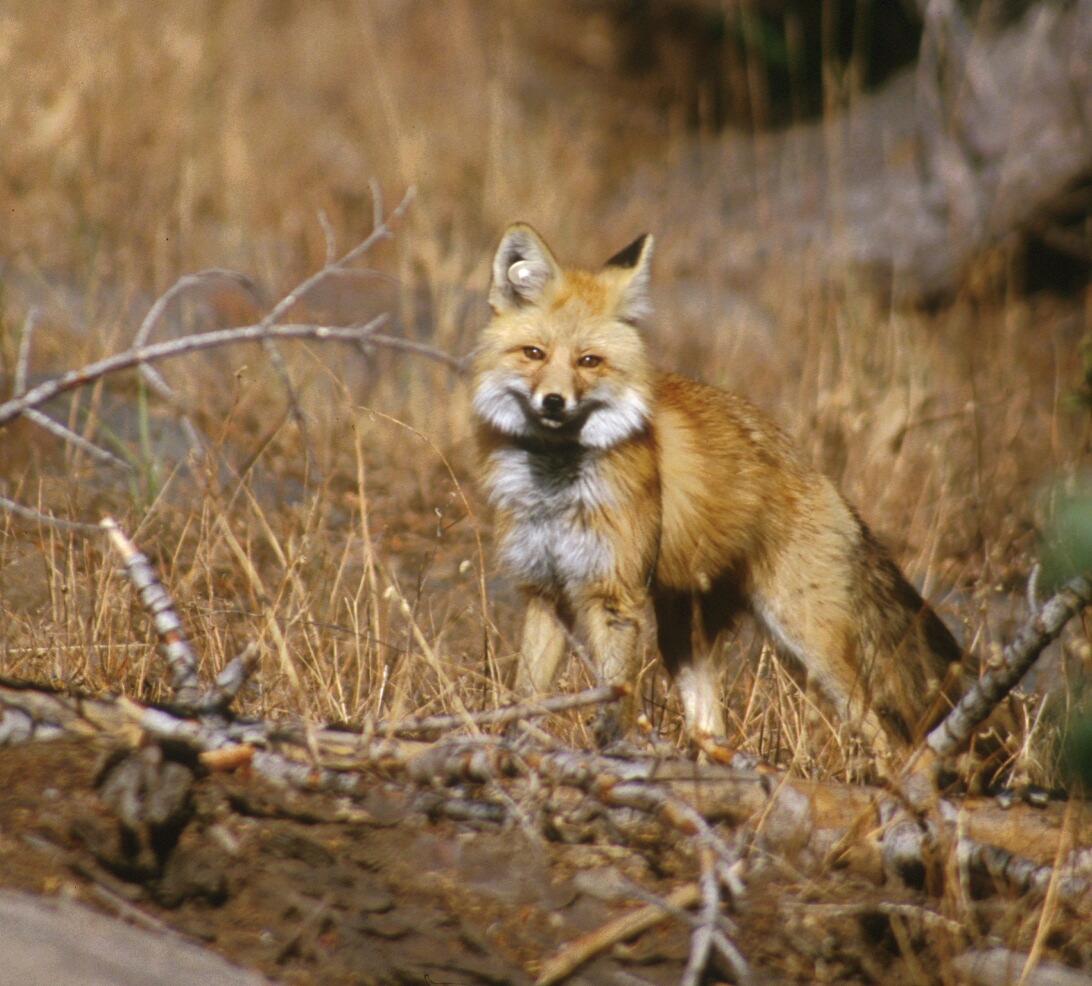
Photo taken by Keith Slausen The Humboldt-Toiyabe’s spectacular 6.3 million acres makes it the largest national forest in the lower 48 states. Located in Nevada and a small portion of eastern California, the Forest offers year-round recreation of all types.
University of California, Davis
September 3, 2010Three weeks ago, when U.S. Forest Service biologists thought they had
found a supposedly extinct fox in the mountains of central
California, they turned to UC Davis for confirmation.Photographs taken by a Forest Service trail camera near Sonora Pass
seemed to show a Sierra Nevada red fox (Vulpes vulpes necator) biting
a bait bag of chicken scraps. That would be an amazing discovery,
since no sighting of that species has been verified south of Mount
Lassen, 200 miles away, since the mid-1990s.The biologists shipped the bait bag to wildlife genetics researchers
Ben Sacks and Mark Statham at the UC Davis Veterinary Genetics
Laboratory. Since 2006, they have radically altered our understanding
of red foxes in California, supplying information crucial to
conservation efforts.Sacks and Statham scraped saliva from the tooth punctures on the bag
and analyzed the DNA within. Before you could say spit, they had the
answer: definitely a Sierra Nevada red fox.“This is the most exciting animal discovery we have had in California
since the wolverine in the Sierra two years ago — only this time,
the unexpected critter turned out to be home-grown, which is truly
big news,” Sacks said. (The wolverine was an immigrant from Wyoming.)Four years ago, Sacks began analyzing California red fox DNA
collected from scat, hair and saliva from live animals, and skin and
bones from museum specimens. Until then, the expert consensus was
that any red fox in the Central Valley and coastal regions of the
state was a descendant of Eastern red foxes (V.v. fulva) brought here
in the 1860s for hunting and fur farms.Sacks and his colleagues have confirmed that red fox populations in
coastal lowlands, the San Joaquin Valley and Southern California were
indeed introduced from the eastern United States (and Alaska). But
they have also shown that:* There are native California red foxes still living in the
Sierra Nevada.
* The native red foxes in the Sacramento Valley (V.v. patwin) are
a subspecies genetically distinct from those in the Sierra.
* The two native California subspecies, along with Rocky Mountain
and Cascade red foxes (V.v. macroura and V. v. cascadensis), formed a
single large western population until the end of the last ice age,
when the three mountain subspecies followed receding glaciers up to
mountaintops, leaving the Sacramento Valley red fox isolated at low
elevation.Sacks’ extensive research program focuses on canids, especially red
foxes (evolution, ecology and conservation) and dogs (genetics,
geographic origins and spread). He and his students also are working
on other carnivores, including disease ecology and interactions among
fishers, bobcats, coyotes and gray foxes, and population genetics of
ringtails and coyotes.About UC Davis:
For more than 100 years, UC Davis has engaged in teaching, research
and public service that matter to California and transform the world.
Located close to the state capital, UC Davis has 32,000 students, an
annual research budget that exceeds $600 million, a comprehensive
health system and 13 specialized research centers. The university
offers interdisciplinary graduate study and more than 100
undergraduate majors in four colleges — Agricultural and
Environmental Sciences, Biological Sciences, Engineering, and Letters
and Science. It also houses six professional schools — Education,
Law, Management, Medicine, Veterinary Medicine and the Betty Irene
Moore School of Nursing.Additional information:
* Ben Sacks home page, including a place to report fox sightings <http://www.vgl.ucdavis.edu/cdcg/home.php>
* U.S. Forest Service news release on Sierra Nevada red fox discovery <http://www.fs.fed.us/r4/htnf/>Media contact(s):
* Ben Sacks, School of Veterinary Medicine, (530) 754-9088,
[email protected]
* Sylvia Wright, UC Davis News Service, (530) 752-7704,
[email protected] -
Leave Hummingbird Feeders Up!
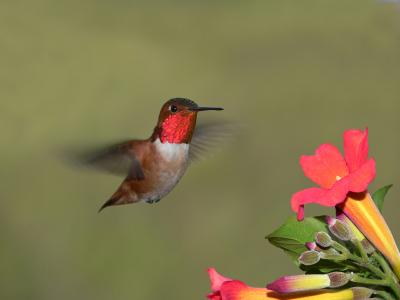
 Hummingbirds are feeding like crazy right now, fattening up and getting ready for the big migration back to their wintering grounds in Central and South America. Feeders seem busier than ever with almost frantic activity at our place.
Because of the heat, sugar water is changed every two days, so filling the larger hummingbird feeders is almost pointless. Eighty pounds of sugar were used to feed our local hummer population this season…and that’s a lot of nectar!
If you don’t make your own nectar-give it a try before the season’s over. Hummingbirds really seem to prefer the simple sugar water solution, and it saves money too.
The recipe: 1 part sugar to 4 parts water…that’s it! No red dye necessary. Use plain white table sugar and nothing else as it will harm hummers. You don’t even need to boil the water as microorganisms and bacteria are actually spread through the bird’s beaks on the feeder ports. We boil 1 cup of water, simply to help dissolve the sugar more effectively. And contrary to popular belief, hummingbirds will not “stay” if you leave feeders up – Mother Nature tells them when it’s time to go!

-
Heated Bird Baths Allow Some Birds to Over-Winter
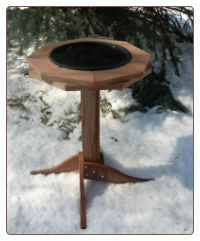
 With the end of summer, so comes the migration south for many song birds. A few favorites may stick around if their habitat suits them well enough. Bluebirds in my yard for example, surprised me last year when they decided to over-winter. Probably because of the juicy live worms they were offered everyday, and mostly because of the heated bird baths in the yard. This season we had three successful broods!
Heated bird baths really are important to wild birds. As temperatures drop and local water sources tend to freeze over, the baths offer an oasis for drinking and bathing. Clean feathers are a must for birds to stay warm too. When you see them “puff up” it is a mechanism they use to retain body heat. Some folks believe birds can eat snow for water, and they can, but it takes them many calories to convert the snow to water. And these are precious calories needed to just stay warm.
If you already have a favorite bath, please don’t empty it and turn it over for winter. Consider adding a heater or deicer to it for the birds. They need fresh water in winter just as much as hot summ
 er months. Many of the newer heaters are safe for use with all bird baths, so there’s no worry about having a metal heater in a plastic or resin bath. The Heated Rock for example, is an innovative new heater that’s safe with all types of baths. Mat-type heaters can be used with all baths as well.
Help birds to thrive and flourish this winter by offering a consistent fresh water source with heated bird baths. You never know who may surprise you and decide to stick around?

Birding Tips, Information & News