

-
Barn Swallows and Purple Martins are on the Way!
With holidays behind us and the fanfare gone- What’s the next event looking forward? Noticing there was still daylight at 6:00 PM, it’s a natural signal that migrations will be underway soon and the swallows will be first. The early birds are purple martins and their cousins too- Barn Swallows!
Scouts begin arriving over the Gulf of Mexico and most southern states about mid-January. Migrations will follow via the same fly-way and before you know it, they’ll be here! Martins’ breeding season is fairly short (unlike resident bluebirds who can have up to 3 clutches per season) so preparation is the key to attracting these most desirable birds. Actually, this holds true for for attracting hummingbirds, barn swallows, orioles and any migratory birds. Have your birdhouses and feeders (nest cups too) ready to go before scouts’ arrival!
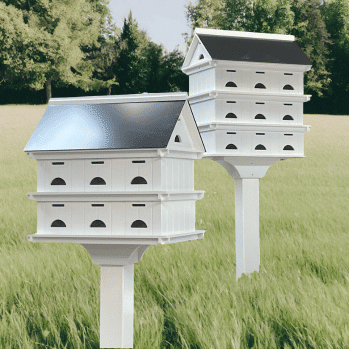
 New for 2024, these exquisite Purple Martin Houses are US made of durable vinyl (that looks like wood) with stackable floors available for easy expansion. Crescent entries help deter starlings while porches offer plenty of perch space. Timeless architecture in crisp black & white will remain classic in all landscapes. Although rack & gourd systems are extremely popular among Martins and their landlords, our new vinyl Martin homes offer something a bit more classic with all of the great features that benefit Martin families… and you can bet martins will be happy to call them home. When set in a desirable habitat, scouts will let the families know of these excellent accommodations!
In the eastern US, purple martins depend solely on man-made housing. Be it gourds, aluminum, wood or vinyl, martins will take to most housing if habitat is ideal. Way back in colonial days, Native Americans first started using gourds to attract purple martins (the largest of the swallow family). A main advantage was and still is natural insect control along with the sweetest of songs. This is also why barn swallows are extremely advantageous to have around your property.
Both species are very family-oriented and will return to the same nesting spots (with kids in tow) year after year. But hosting martins takes more than just putting up a Martin house. A vigilant approach is required for successful fledges and returning families. Non-native birds such as European Starlings and House Sparrows are enemy #1 to both martins and barn swallows. In fact, they’re brutal to all of our native cavity-nesting birds- including bluebirds. Simple territorial issues will wreak havoc on our nesting birds. Both starlings and house sparrows will overtake Martin houses, kill nestlings and even kill adult martins. They’ve been well known for decimating our birdhouse occupants and wiping out populations in some areas.
Monitoring your Martin house is extremely important. Starlings and sparrows (if in the area) will predate martins to claim territory so they must be deterred for martins’ breeding season. Whether you agree or not, these non-native birds are about the only ones where it’s not only legal- but encouraged to dispose of both invasive species.Other helpful hints for attracting martins include ditching any chemicals in your yard because insects are their main diet. Installing a baffle or predator guard on your matin pole also deters any curious climber from reaching eggs. Habitat is key with very open spaces, preferably near water. Martin houses should be installed at least 30 ft. from your home and taller than any nearby trees which require a 40 ft. clearing at minimum.
Check out these Purple Martin Groups on social media, whether Martin novice or seasoned landlord, the popularity of hosting martins has exploded over the years. Anything purple-martin related can be found, mistakes others may have experienced great advice, interesting images and facts… in just a few clicks!
• PMCA (Purple Martin Conservation Association)
• Purple Martin Landlords and Wannabes
• Purple Martin Fanatics
• Purple Martin Files
• Purple Martin Group
Your state may also have their own Purple Martin Society. Most important- have your Martin House up & ready to go prior to scouts’ arrival.Oh yeah… Martins adore white feathers for nest construction! If you see the birds, toss a few feathers in the air and they’ll dive-bomb to retrieve. Scatter a few on the ground near your new Martin house too. Offering white feathers with some nesting material will be appealing to mom and dad. A standard suet cage work’s well. Simply hang it so that martins will see your welcoming offer.
Happy birding and here’s to longer daylight hours!!
-
Unique Birdhouse-Feeder Gifts: Shop Now!
2020 Holiday Shipping is No Laughing Matter.
Be Wise… Shop Now for unique birdhouse gifts, bird feeders and cool birdbaths for real lasting joy!

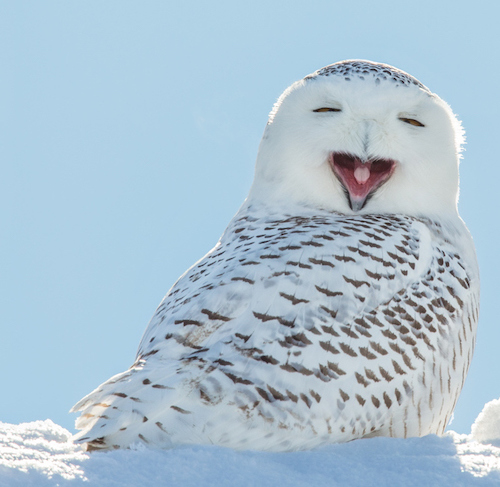
Snowy owl yawning, which makes it look like it’s laughing. Online shopping has taken on new heights since spring and the pandemic. Aren’t you just sick to death of hearing about it? But carriers have been inundated with volume so this holiday (unlike past years) definitely raises some concerns.
For the most part, USPS, UPS and FedEx are doing a great job all things considered. But since everything is relative, there’s always a small percentage of issues with either a wrong delivery address, damage & breakage or just plain loss. And this really stinks if it just happens to be your holiday birdhouse gift to someone special.
The struggle is real!
So this year, we’re literally begging folks to shop early. Not only for the best selection from a small boutique of curated birding and garden gifts, but also for the very best level of customer service should any possible issues arise with your shipment.And those possibilities are quite real… frustrating, stressful, time consuming and just plain aggravating because the shipper has no control over such issues 🙁 It takes time, diligence, major persistence and sometimes even re-sending the birdhouse or bird feeder again. If you wait until December 10th to order your gift, there’s simply not enough time to rectify any issues should one arise.
The little ditty below offers an idea of where things stand with holiday birdhouse and bird feeder gifts and anything else you may be planning to order online)!
The best birdhouse gifts for holiday start right here,
For all those on your list may they be far or near.Last spring folks dabbled in backyard birding, garden and yard,
It became addictive- but ya can’t decide? So opt for a gift card.Fab birdhouses and feeders mostly handmade,
Recycled or poly won’t crack, chip or fade.Birdbaths in all styles, curated yard art so fun,
With covid concerns at stores maybe best not to run?Find a whimsical, vintage, mod, rustic birdhouse and more,
Farmhouse & chic’s popular, their gift will make spirits soar.Give presents of presence but please order soon,
Should you want it for holiday and not in June!For a bit of motivation, nab 10% off through October 25th.
Use promo code 10-now.
Some restrictions may apply. -
Hummingbird Feeder Mask’s Been Around BC
BC? Yes, the new BC… Before Covid. We hope you and yours are faring well in these strange times. And we’re excited so many folks discovered (or rediscovered) their yards, gardening and backyard birds during quarantine.
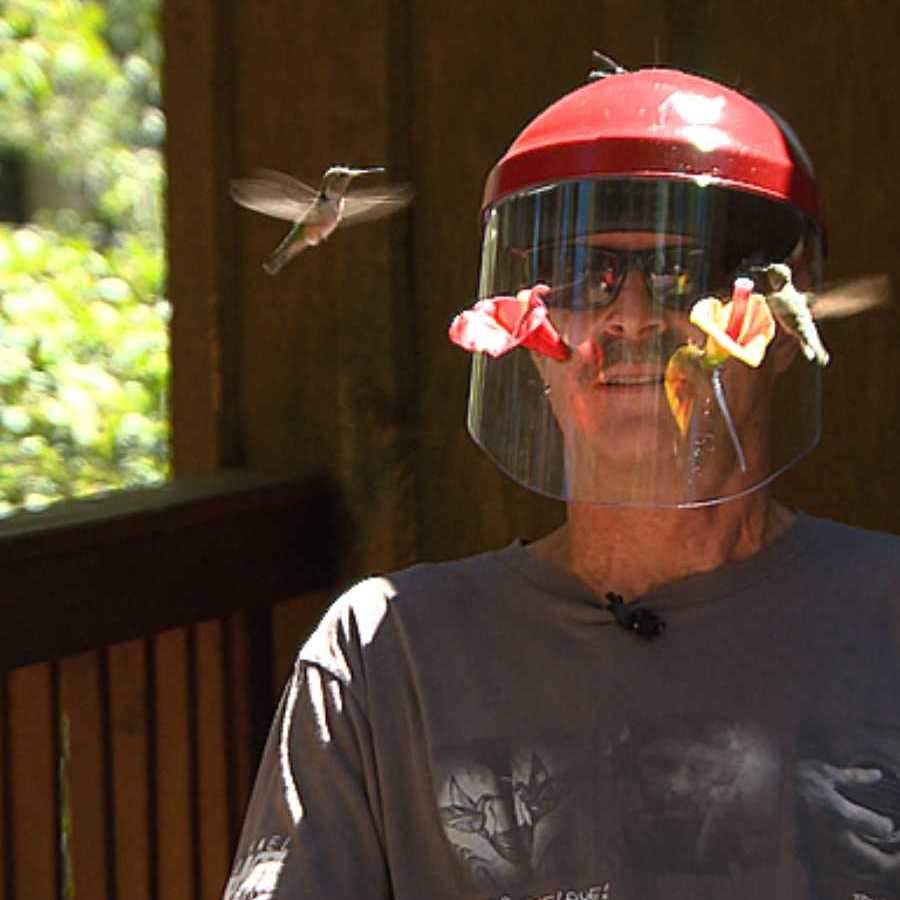
Actually a full face mask that’s interactive- so how fun is this hummingbird feeder! From a whole new perspective, sprites will feed and dance right before your eyes. The idea came to fruition several years ago, and after a few iterations (including a hole and extra long straw to sip your cocktail) humm-viewer was brought to market. Folks who’ve purchased these unique hummingbird feeders have given some excellent feedback. Truly a swell gift for any nature buff or hummingbird enthusiast! The hit of any backyard gathering as well.
The mask comes choc full of stuff… though the party’s not included!
- bulb for easy filling of tubes
- cleaning brushes
- microfiber cloth for mask cleaning
- easy directions
- cloth bag to store the feeder
- extra long straw for your favorite nectar! (beverage of choice)
As a side note: This past spring, the masks were produced sans the hummingbird feeder and offered to local healthcare workers when masks were in short supply. Kudos to the makers for quickly responding and adapting to the pandemic in a meaningful and helpful way.
Here in Atlanta, male hummingbirds started south about one week ago. Females and juveniles will be going soon. Keep feeders fresh and filled even after hummingbirds are gone. Stragglers from further north may very well need to refuel for the long journey. And it’s a total myth that if you leave your hummingbird feeder up too late, the sprites won’t leave. Utter nonsense as nature tells them when it’s time to go!
And last: We’re begging for you to shop earlier for holiday this year. Not only for the best selection from a small boutique, but to get your gifts on time! Shipping/transit times were very different BC (before covid, remember?). Carriers are already at capacity with the steep increase of online ordering. So please do think twice and order soon… in case your package accidentally takes a trip around the moon!

Hummingbird Feeders
about feeders & accessories
 New for 2024, these exquisite