Archive for the 'Uncategorized' Category

Got Squirrel Damage to Blue Bird Houses?


September 7, 2010
posted by birdhouse chick @ 12:53 am

squirrel damage to blue bird houseOkay…so this may not be a bluebird house, but it does represent a typical squirrel-enlarged entrance. Has this happened to any of your birdhouses?

Early fall is the perfect time to clean birdhouses in preparation for winter. Resident birds like chickadees, titmice, and wrens will use houses to roost on cold winter nights. Our bluebirds actually stuck around and over-wintered here in North Georgia last year, so blue bird houses should also receive a thorough cleaning.

An old spatula works well to remove nesting materials, and makes the perfect scraper to remove stuck-on debris. Discard nest material away from the birdhouse, as this will likely attract predators. For the safety of your health, never breath in the dust from the nest materials either. Rubber gloves are helpful too.

To salvage an enlarged entrance and restore your birdhouses, predator guards are available. Simple metal portals work well, and fit right over the entrance, denying large birds or squirrels back inside the house. Two small nails will tack these down securely and in a jiffy! Decorative predator guards are also available, and will undo the damage done to your birdhouse.

Don’t Touch That Window Hummingbird Feeder!


September 5, 2010
posted by birdhouse chick @ 12:12 am

jewel box window hummingbird feederWild bird migrations are one of those pretty amazing feats of nature. Instinct is so keen, it’s what keeps birds alive. Hummingbirds don’t begin their long journey just because the temperatures start to drop. It is the dwindling hours of daylight that signals them it’s time to go.

Many Ruby Throats are mobbing feeders right now, furiously drinking as much as they can in preparation for the long trip to South and Central America. How these tiny birds manage to fly so far is beyond me? The other pretty amazing thing is that hummingbirds practice site fidelity. Which means if they find a friendly yard with food, shelter and moving water, you can bet they’ll be back next season.

The show at our window hummingbird feeder right now is spectacular! There’s hardly a moment throughout the day where it’s not occupied. Constant feeding (and fighting) has been going on for a about two weeks. If you have nectar feeders, especially a window hummingbird feeder, be sure to keep it filled with fresh nectar for the next few weeks. Even if you think your hummers have left for the season, many that are traveling from further north of you are likely to stop by and fuel up! Be on the lookout for the occasional flying jewel, your efforts will be well rewarded.

FOX SPIT HELPED FOREST SERVICE CONFIRM RARE FIND


September 3, 2010
posted by birdhouse chick @ 8:05 pm

Photo taken by Keith Slausen

The Humboldt-Toiyabe’s spectacular 6.3 million acres makes it the largest national forest in the lower 48 states. Located in Nevada and a small portion of eastern California, the Forest offers year-round recreation of all types.

University of California, Davis
September 3, 2010

Three weeks ago, when U.S. Forest Service biologists thought they had
found a supposedly extinct fox in the mountains of central
California, they turned to UC Davis for confirmation.

Photographs taken by a Forest Service trail camera near Sonora Pass
seemed to show a Sierra Nevada red fox (Vulpes vulpes necator) biting
a bait bag of chicken scraps. That would be an amazing discovery,
since no sighting of that species has been verified south of Mount
Lassen, 200 miles away, since the mid-1990s.

The biologists shipped the bait bag to wildlife genetics researchers
Ben Sacks and Mark Statham at the UC Davis Veterinary Genetics
Laboratory. Since 2006, they have radically altered our understanding
of red foxes in California, supplying information crucial to
conservation efforts.

Sacks and Statham scraped saliva from the tooth punctures on the bag
and analyzed the DNA within. Before you could say spit, they had the
answer: definitely a Sierra Nevada red fox.

“This is the most exciting animal discovery we have had in California
since the wolverine in the Sierra two years ago — only this time,
the unexpected critter turned out to be home-grown, which is truly
big news,” Sacks said. (The wolverine was an immigrant from Wyoming.)

Four years ago, Sacks began analyzing California red fox DNA
collected from scat, hair and saliva from live animals, and skin and
bones from museum specimens. Until then, the expert consensus was
that any red fox in the Central Valley and coastal regions of the
state was a descendant of Eastern red foxes (V.v. fulva) brought here
in the 1860s for hunting and fur farms.

Sacks and his colleagues have confirmed that red fox populations in
coastal lowlands, the San Joaquin Valley and Southern California were
indeed introduced from the eastern United States (and Alaska). But
they have also shown that:

* There are native California red foxes still living in the
Sierra Nevada.
* The native red foxes in the Sacramento Valley (V.v. patwin) are
a subspecies genetically distinct from those in the Sierra.
* The two native California subspecies, along with Rocky Mountain
and Cascade red foxes (V.v. macroura and V. v. cascadensis), formed a
single large western population until the end of the last ice age,
when the three mountain subspecies followed receding glaciers up to
mountaintops, leaving the Sacramento Valley red fox isolated at low
elevation.

Sacks’ extensive research program focuses on canids, especially red
foxes (evolution, ecology and conservation) and dogs (genetics,
geographic origins and spread). He and his students also are working
on other carnivores, including disease ecology and interactions among
fishers, bobcats, coyotes and gray foxes, and population genetics of
ringtails and coyotes.

About UC Davis:
For more than 100 years, UC Davis has engaged in teaching, research
and public service that matter to California and transform the world.
Located close to the state capital, UC Davis has 32,000 students, an
annual research budget that exceeds $600 million, a comprehensive
health system and 13 specialized research centers. The university
offers interdisciplinary graduate study and more than 100
undergraduate majors in four colleges — Agricultural and
Environmental Sciences, Biological Sciences, Engineering, and Letters
and Science. It also houses six professional schools — Education,
Law, Management, Medicine, Veterinary Medicine and the Betty Irene
Moore School of Nursing.

Additional information:
* Ben Sacks home page, including a place to report fox sightings <http://www.vgl.ucdavis.edu/cdcg/home.php>
* U.S. Forest Service news release on Sierra Nevada red fox discovery <http://www.fs.fed.us/r4/htnf/>

Media contact(s):
* Ben Sacks, School of Veterinary Medicine, (530) 754-9088,
bnsacks@ucdavis.edu
* Sylvia Wright, UC Davis News Service, (530) 752-7704,
swright@ucdavis.edu

Leave Hummingbird Feeders Up!


September 3, 2010
posted by birdhouse chick @ 8:38 am

Blown Glass Hummingbird feeders by ParasolHummingbirds are feeding like crazy right now, fattening up and getting ready for the big migration back to their wintering grounds in Central and South America. Feeders seem busier than ever with almost frantic activity at our place.

Because of the heat, sugar water is changed every two days, so filling the larger hummingbird feeders is almost pointless. Eighty pounds of sugar were used to feed our local hummer population this season…and that’s a lot of nectar!

If you don’t make your own nectar-give it a try before the season’s over. Hummingbirds really seem to prefer the simple sugar water solution, and it saves money too.

The recipe: 1 part sugar to 4 parts water…that’s it! No red dye necessary. Use plain white table sugar and nothing else as it will harm hummers. You don’t even need to boil the water as microorganisms and bacteria are actually spread through the bird’s beaks on the feeder ports. We boil 1 cup of water, simply to help dissolve the sugar more effectively. And contrary to popular belief, hummingbirds will not “stay” if you leave feeders up – Mother Nature tells them when it’s time to go!Ruby Throat Feeding at Flowers

Heated Bird Baths Allow Some Birds to Over-Winter


September 1, 2010
posted by birdhouse chick @ 9:59 pm

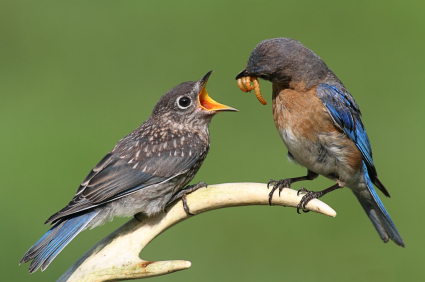
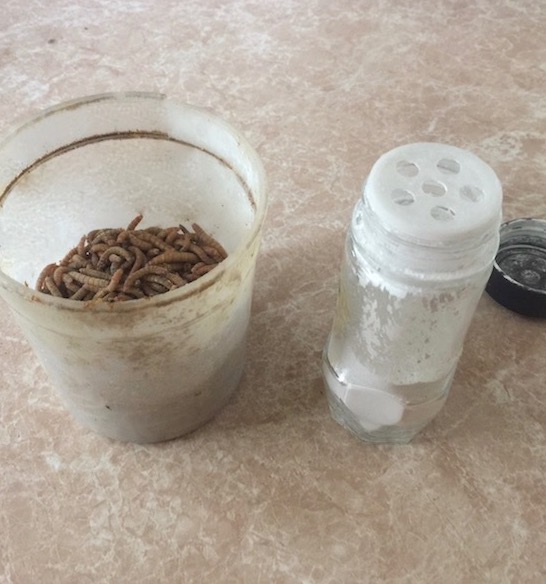
Classic Cedar Heated Bird BathWith the end of summer, so comes the migration south for many song birds. A few favorites may stick around if their habitat suits them well enough. Bluebirds in my yard for example, surprised me last year when they decided to over-winter. Probably because of the juicy live worms they were offered everyday, and mostly because of the heated bird baths in the yard. This season we had three successful broods!

Heated bird baths really are important to wild birds. As temperatures drop and local water sources tend to freeze over, the baths offer an oasis for drinking and bathing. Clean feathers are a must for birds to stay warm too. When you see them “puff up” it is a mechanism they use to retain body heat. Some folks believe birds can eat snow for water, and they can, but it takes them many calories to convert the snow to water. And these are precious calories needed to just stay warm.

If you already have a favorite bath, please don’t empty it and turn it over for winter. Consider adding a heater or deicer to it for the birds. They need fresh water in winter just as much as hot summThe Rock Birdbath Heater with Thermostater months. Many of the newer heaters are safe for use with all bird baths, so there’s no worry about having a metal heater in a plastic or resin bath. The Heated Rock for example, is an innovative new heater that’s safe with all types of baths. Mat-type heaters can be used with all baths as well.

Help birds to thrive and flourish this winter by offering a consistent fresh water source with heated bird baths. You never know who may surprise you and decide to stick around?

Bluebird Houses in the News: Proven Beneficial


August 30, 2010
posted by birdhouse chick @ 11:10 pm

It’s difficult to convince folks sometimes, and all the blogging in the world may not make a bit of difference. But when the Associated Press does an article on the benefits of backyard birding…it seems a bit more substantial. Bluebird houses have been proven beneficial in the fight against unwanted insects. Much better than ineffective pesticides, most of which have been rendered useless….read on!

DEAN FOSDICK

This Jan. 23, 2005 photo shows an Eastern bluebird photographed near McLeansville, N.C. Eastern bluebirds are voracious insect feeders, especially during nesting and rearing periods. Their primary diet includes flies, katydids, beetles, worms and spiders. They’re aerialists, catching insects on the fly or pouncing on them on the ground. (AP Photo/Dean Fosdick)

Growers are beginning to understand that common birds can be of uncommon value to fields, lawns and gardens.

Many avian species earn their keep by eating insects and small mammals, and destroying weed seeds.

“Commercial growers are turning to birds as an alternative or supplement to pesticides,” said Marion Murray, an Integrated Pest Management project leader with Utah State University Cooperative Extension. “But you have to have the environment or habitat before inviting them in.”

That means mimicking nature by providing plenty of food, water and cover. Put up some bluebird boxes or nest boxes for raptors, said Marne Titchenell, a wildlife specialist with Ohio State University Extension.

“Monitor the bluebird boxes so sparrows don’t take over,” she said. “Brushier habitat provides protection for insect-eating songbirds. Allow the edges of your woodlot to grow up a bit. Berry-producing shrubs are excellent things to have around for all kinds of wildlife.”

Birds occupy a unique place in nature, according to the authors of a timeless 1912 study, “Red Bird, Green Bird: How Birds Help Us Grow Healthy Gardens,” by Harry A. Gossard and Scott G. Harry (Ohio State University Extension, revised edition 2009). “Each species performs a service which no other can so well accomplish,” the authors said.

Raptors such as hawks and owls chase down field mice, moles and grasshoppers. Insectivores like bluebirds, chickadees and woodpeckers stalk beetles, worms and grubs.

Meadowlarks are ground feeders, favoring meadows and farm fields where they gorge on grasshoppers and weevils. Robins focus on lawns and gardens, where they pull up cutworms, wireworms and other larvae injurious to crops.

Chickadees are birds of the forest, eating tent caterpillars, bark beetles and plant lice. Goldfinches prefer open country where they can pursue caterpillars and flies. “No other bird destroys so many thistle seeds,” the authors say.

“An individual tree swallow, barn swallow, purple martin or chimney swift can eat up to a thousand flying insects a day,” said David Bonter, assistant director of Citizen Science with the Cornell Lab of Ornithology. “They can have a big impact.”

While it’s great to have these specialized bug hunters around if you’re a grain farmer, small commercial farmer or orchard grower, recruiting should be directed toward a variety of species, said Margaret Brittingham, a professor of wildlife resources at Penn State University.

“All insect eaters feed at different heights, on different plants and prefer different insects,” she said. “Having some (bird) diversity is important in maintaining insect populations. What we don’t want to wind up with is having a monoculture with birds as we frequently do with plants, inviting problems.”

___

Online:

For more about birds for alternative pest management, see this Utah State University fact sheet http://utahpests.usu.edu/htm/utah-pests-news/fall-09/

You can contact Dean Fosdick at deanfosdick(at)netscape.net

Use Hopper Bird Feeders to Hold More


August 29, 2010
posted by birdhouse chick @ 1:57 pm

Eleven quart hopper bird feederThe backyard birding experience is about watching wild birds, their behaviors and songs, and their interactions in the habitat you’ve provided. At times it can be captivating, watching nature thrive, close up in your yard. It can literally “take you away” from the day-to day mundane, to the extraordinary.

Maintaining feeders is large part of this great hobby – cleaning and filling them. It’s the responsible thing to do if you’re attracting birds to gather in rather unnatural groups and eat from these feeders. If you’re looking to spend less time filling and more time viewing, hopper bird feeders are a perfect choice. Hoppers tend to hold more seed than tube type feeders.

Large capacity hopper bird feeders will entice a good variety of species as well. Just about any kind of seed mixes will work with them, and some even offer suet cages for more food variety. We like to use sunflower hearts, as there is no waste or ground mess to deal with. This seed may cost a couple of bucks more, but is well worth it in the long run.

The hopper bird feeder shown above is constructed of durable cedar, and holds 11 quarts of seed, it even offers two suet cages that will attract different species. These feeders are also available in recycled plastics that are guaranteed to never crack, split or fade. Whether wood or plastics, with hopper bird feeders you’ll spend less time filling and more time watching!

Some Very Wild Bird Feeders


August 27, 2010
posted by birdhouse chick @ 11:50 pm

Ceramic Cupcake Wild Bird FeederBird feeders of every make and model imaginable will keep your feathered friends fat and happy! Any wild bird feeders that are easy to fill and clean are the ones that will attract more birds. If it becomes a real pain to clean…you may not tend to do it on a regular basis. And this is of utmost importance to birds’ health, as disease can be spread very easily amongst the immediate population.

Stoneware, ceramics and glass wild bird feeders alleviate the dreaded gnawing of squirrels, and this can be a big plus to many folks who have football teams of the critters in their yard. Another benefit of these materials is they are non-porous, which prevents bacteria and germs from settling into surfaces.Stoneware Cool Cat Bird Feeder

Pictured are just a few fun bird feeders that are guaranteed to attract and entice feathered friends. From ceramic cupcakes, to stoneware cats, these wild bird feeders make awesome gifts for any birding enthusiast or nature lover that might be on your list! Wild bird feeders make very long-lasting gifts, that actually get used everyday…now what could be better than that?

Fun Stoneware Bird Feeders

Even Wood Birdhouses Go Recycled


August 25, 2010
posted by birdhouse chick @ 10:54 pm

Blue Roof Motel BirdhouseThere is something to be said for weathered wood, it has a character you just don’t see in new construction. Recycled barn wood has become quite popular in many home and garden items. The rustic look has wonderful appeal and blends with many styles of decorating. I remember seeing a barn wood bench in the Sundance catalog years ago that was beautiful, but out of my price range.

For the garden, some artists are crafting wood birdhouses from old barn wood and fence posts. Using reclaimed items such as tin, license plates, and even materials from local junk yards, these houses have character beyond compare. Wood birdhouses with clean-outs and ventilation are meant for feathered friends and provide vital nesting and roosting spots.

The Blue Roof Motel shown here is crafted from old barn wood and tin. Twelve cozy compartments each provide a great spot for wrens, finches, chickadees and other small songbirds. Also available in red, this wood birdhouse compliments just about any garden or landscape, and offers birds protection from the elements and predators too. In early spring, any number of the 12 compartments may become the perfect nest site for your feathered friends!

Red Roof Motel Birdhouse

Decorative Bird Houses Built to Last a Lifetime


August 24, 2010
posted by birdhouse chick @ 10:52 pm

Vinylwith Copper Roof bird housesProviding much needed nesting sites for wild birds has really evolved since backyard birding has become such a popular hobby. Today, decorative bird houses run the gamut from just a few bucks to hundreds of dollars for an artist’s piece of work. Hand made, high quality birdhouses and bird feeders that command attention while enticing and attracting feathered friends.

These copper roof decorative bird houses are constructed of PVC/vinyl and guaranteed to last a lifetime. Because it is the same vinyl used in the construction of people houses….you know it’s going to last. With little to no maintenance, the houses and feeders are a dream. Forget about squirrels gnawing on them, or weathers’ severe toll like their wooden counterparts. These houses and feeders are absolutely guaranteed to never crack, split or fade.Vinyl with copper roof decorative birdhouse

One of the great things with these vinyl and copper roof houses is that each piece is made to order, so you get to choose either a bright copper, or an aged patina copper roof. The other factor is the amazing quality. Hand crafted using a CNC router ensures absolute precision in each and every bird house and feeder. Some models are even available with a cypress shingle roof for a more rustic look.

Sizes range from a six-to-eight inch diameter house for bluebirds, all the way up to a jumbo 22-inch diameter for purple martin houses – which happen to be about four feet tall! From single compartments, to twelve compartments, with copper portals or perches, there are many great designs from which to choose. The roof shapes vary too, offering a bell, slope, or curly accent on the top of these wonderful decorative bird houses. They make an awesome and life-long gift for any backyard birder on your list!8 Compartment Dovecoat Vinyl and Copper Birdhouse